With the increased globalization of the game, major tournaments are heading to new lands. Austria and Switzerland hosted Euro 2008, with next year's event heading to Poland and Ukraine. Last year South Africa staged the World Cup with Russia and Qatar on the horizon. While I'm all for spreading the game around the globe (aside for whatever shadiness helped Qatar land the 2022 World Cup), this trend presents a flaw with regards to tournament seeding.
Tournament hosts automatically qualify, which makes perfect sense. If you're hosting a party, you're obviously getting a seat at the table. For countries such as Austria, South Africa and Qatar, this means a rare chance to compete. For the likes of Russia and Poland, it guarantees entry into an event where sometimes they qualify and sometimes they don't. But I think it's absurd that, when it comes time for the draw, the qualifying hosts are further rewarded with unjustified one seeds that throw off the balance of the opening round.
Take last Friday's Euro 2012 draw as an example. The pre-dertermined one seeds were Spain and Netherlands (certainly deserving) along with co-hosts Poland and Ukraine. Instead of one seeds going to, say Germany and Portugal, those two teams ended up in the Group of Death, Group B, with Holland. Where's the fairness there?
Of course, the potential for a Group of Death adds excitement to the draw and creates better opening round matches. But consider that from the trio of Holland, Germany and Portugal, at least one side will miss the knockout round, while among Russia, Greece and Poland, at least one will advance. The quarterfinals get watered down when teams aren't slotted properly.
Although co-hosts double the problem, at least the 16-team Euro field is deep enough to make this less of an issue. But in the World Cup, where there's a large gap between the contenders and the countries that are just happy to be there, giving a one seed to a South Africa or Qatar is absurd. We still have 10 years until Qatar hosts a World Cup. Let's hope there's a change to the seeding system before then.
And with that post, I'm proud to say that I wrote at least one in 2011, one day shy of the anniversary of my last post. Time and energy for blogging are in short supply these days, but I'm determined not to totally abandon my humble Soccer Haus. If you made it this far, thanks for reading!

Sunday, December 4, 2011

Sunday, December 5, 2010
World Cup 2022: The U.S. Falls Flat
 Following the disappointment of the United States’ failed bid for the 2022 World Cup, I received an e-mail from U.S. Soccer President Sunil Gulati with the subject line “What We Achieved.” Although Sunil and I are tight, I assume a few other U.S. Soccer backers got the same note. With all due respect to the efforts of the U.S. bid committee — they certainly did all they could to bring the World Cup back to America — I have a hard time seeing any positives from the sordid process that awarded the 2018 World Cup to Russia and the 2022 World Cup to Qatar.
I wish I could believe the idealistic viewpoint of Gabriele Marcotti, who says FIFA is spreading the World Cup love around to grow the game throughout the world. That’s a noble thought, but one that’s a tough sell given the process. How does a bid that was judged to put the athlete’s health at serious risk win so handily over the foolproof American candidacy? How does a technically sound English bid garner only one vote besides the one cast by their own FIFA representative? And how can we trust 22 voters when two of their colleagues were eliminated from the process for allegedly taking bribes?
Had FIFA chosen either England or the United States and paired that host with an ambitious bid from Russia or Qatar, I could believe the promoting the global game theory. But surely money-hungry group FIFA must have had other reasons for passing up two jackpot hosts. Grant Wahl claims “that petrodollars talk,” and the pairing of two oil rich nations as hosts back that concept.
So how long must we wait for another World Cup in the U.S.? 2026 is a possibility, but European foes will be in the mix. 2030 is the 100th anniversary of the World Cup, and original hosts Uruguay are striving to put together a joint bid with Argentina in time for the celebration. Just as Atlanta plucked the Centennial Olympics away from Athens, in 1996 the Americans may have the stronger case here. So sit tight. Despite all we have to offer as a World Cup host, it’s going to be awhile.
Wednesday, December 1, 2010
Will The Game Be In Us?
 By this time tomorrow we know which nations will host the 2018 and 2022 World Cup. With one last chance to impress a couple dozen FIFA voters, the United States bid team mixed passion, humility and undeniable strengths into a strong presentation. Now those FIFA's voters must decide if they agree with Morgan Freeman, Landon Donovan, Bill Clinton, and USSF President Sunil Gulati.
Earlier I speculated that FIFA can choose between hosts that will guarantee a financially successful World Cup (England and the United States) or those that represent growth opportunities for the game (Russia and Qatar). The U.S. bid committee successfully showed they are both. American arrogance never plays well on the international stage, so Gulati needed to strike a confident but humble tone. He presented the strengths of the American facilities, infrastructure and television audiences, while positioning the U.S. at the midpoint of a 50-year growth plan. I thought the balance was perfect.
While Gulati focused on the nuts and bolts, the rest of the team showcased the emotional side of the American bid and our unmatched ethnic diversity. Athletes rarely come off as relatable, but when Landon Donovan said attending the World Cup in 1994 had an impact on his life and development as a soccer player, I felt a personal connection. I doubt I would be blogging about soccer today if not for the thrilling experience of attending World Cup games at Giants Stadium 16 years ago.
Clinton's appearance as the political star was made more powerful because he was such a visible backer of the U.S. side in South Africa. Clinton wasn't just reading a script when he spoke of his love of the game; that passion was on display for all to see back in June. I doubt Morgan Freeman's slip-up with the script will cost the U.S. any votes, but if it does he should be sent back to Shawshank Prison immediately. Otherwise his eloquent narration set the tone for a well-paced presentation.
Tomorrow we'll know if it was all worth the effort. Either the way, the United States team should be proud of their performance.
Sunday, November 28, 2010
2018 and 2022 World Cups: Which Bids Win?
 Almost six months after playing to a 1-1 draw in South Africa, the U.S. and England will again be in the World Cup spotlight Thursday. This time they’re the favorites to land the 2018 and 2022 tournaments. The 2018 race features four European bids, while the United States and four opponents from the Asian confederation vie for the 2022 rights. The same question applies to both elections: Will FIFA choose the safe bets that offer a big payday or will they choose an emerging soccer nation in order to promote the game’s growth?
FIFA boss Sepp Blatter combined the bidding process for the ’18 and ’22 World Cups to create an attractive combo platter for sponsors and television rights holders. But the grab for mo’ money has created mo’ problems. Votes have allegedly been up for sale, two members of the executive committee have been stripped of their voting rights, and the dual election has taken on a “I’ll vote for you if you vote for me” feel reminiscent of high school student council elections. With that background, the race is even more difficult to handicap
England is matched against Russia and joint bids from Spain/Portugal and Holland/Belgium and there’s no doubt an English World Cup would a financial success. But if FIFA is looking to grow the game, Russia is the logical choice. And while a great deal of construction would need to take place between now and 2018, the Russian government is ready to committee the dollars needed.
If FIFA needed a country to step in and host the World Cup next week, America would be ready to go. All those super-sized NFL stadiums and U.S.-based global sponsors represent big bucks for FIFA. And while the U.S. 2022 bid has its drawbacks — the size of the country makes travel difficult and public transportation is limited around many venues — overall America is a risk-free host.
South Korea and Japan shared hosting duties eight years ago, so there’s no reason the World Cup would return as early as 2022. Australia’s bid suffers from limited support from the Aussie Rules Football and Rugby leagues whose seasons conflict with the World Cup. That leaves Qatar as the chief rival to the U.S., and while the Arab nation started as long shots, their bid has gained credibility and momentum. The biggest obstacle for Qatar is the stifling desert heat. But if their committee can convince FIFA voters on their plans to use innovative cooling technology, they could emerge as winners.
My hunch says FIFA will pick one host from the “safe” category and one from the “growth” category. And while backroom dealings could send the votes any number of directions, I can’t see England’s bid falling short. Russia will get a World Cup someday, but the next European hosting cycle is more likely. Does England’s success mean the U.S. gets left out? Not necessarily. But FIFA is giving the 2022 winner 12 years to get ready and Qatar is a nation that would put that time to excellent use. Don’t be surprised if America gets left on the sideline.
Saturday, October 16, 2010
My Evening with Bocanegra
These are the cool things that happen when you live across the street from one of America's best soccer bars. The U.S. Men's National Team came to Chicago last week to play Poland in a friendly at Soldier Field. Smart scheduling by the U.S. for a friendly as Chicago has the second largest Polish-speaking population outside of Warsaw. As part of the week, ussoccer.com's online show, Studio 90, taped that week's episode at SmallBar on Division Street, just a Tim Howard goal kick away from my place.
I showed up a few minutes before the taping was set to begin with team captain Carlos Bocanegra and was told that the crew needed people to fill in the seats right behind the desk. Happy to oblige, especially when "filling in the seats" means you're front and center for the whole show. This was a tough break for anyone hoping one of Bocanegra's attractive female fans might occupy that seat, but a real thrill for me. And Bocanegra was nice enough to sign my mini Jabulani after the taping. Thanks to Phil and the crew at SmallBar for hosting a great event.
I showed up a few minutes before the taping was set to begin with team captain Carlos Bocanegra and was told that the crew needed people to fill in the seats right behind the desk. Happy to oblige, especially when "filling in the seats" means you're front and center for the whole show.
 This was a tough break for anyone hoping one of Bocanegra's attractive female fans might occupy that seat, but a real thrill for me. And Bocanegra was nice enough to sign my mini Jabulani after the taping. Thanks to Phil and the crew at SmallBar for hosting a great event.
Wednesday, October 6, 2010
Red (Sox) Dawn Rising at Anfield
 The purchase of Liverpool Football Club today by New England Sports Venture (NESV) brings to an end a sorry chapter in the club's storied history- the ownership reign of Tom Hicks and George Gillett. Fortunately for Reds fans such as myself, the team will soon be in the hands of an ownership group lead by John Henry that has proven to be far more competent than their predecessors.
As the team's debt mounted and Liverpool fans became more enraged with the dynamic duo of Hicks and Gillett, passionate supporters mounted a social media campaign targeting global banks that could potentially offer a loan to the LFC ownership group. With so much anger directed at American owners, I was concerned that Reds fans wearing "Thanks but no Yank$" scarves would be dismissive of a takeover bid from another American. Fortunately the majority of the fans have been smart enough to see the approach Henry's group has taken with the Red Sox, a model for success that the Liverpool faithful hope will be repeated at Anfield.
How NESV cross-markets LFC and the Red Sox will be interesting to follow. Beyond both teams donning red socks on gamedays, the two legendary squads have many similarities. (Many of which Bill Simmons pegged four years ago.) When Henry and company took over the Red Sox in 2002, Fenway Park was an aging venue, targeted for replacement. The fan base was desperate for a championship, tired of seeing their arch rivals snatch up all the hardware. Sound familiar?
With Fenway, rather than building a new stadium, the NESV group found new ways to squeeze revenue out of the park and enhance the fan experience. Once the monster seats were introduced, they became the hottest location in baseball. And within three seasons, the long-awaited championship had been delivered to Boston. The 2004 World Series run was made even sweeter when the Sox rallied from 0-3 down in the ALCS against the Yankees, a team often compared to Manchester United.
New England is a soccer hot bed, and the NESV team has a great opportunity to ramp up LFC marketing efforts in that area. A well-attended friendly at Fenway this summer between Glasgow Celtic and Sporting Lisbon could be a prelude to Steven Gerrard and company playing a pre-season match in front of the Green Monster. Boston media are showing interest in the story, although much of it comes from the "How will this effect the Red Sox?" perspective. Still, I enjoyed the Boston Globe running an "Eight Things You Should Know About Liverpool" photo gallery on the home page today.
Ultimately Liverpool fans want to see an ownership group that will do three things: eliminate the crippling debt; respect the traditions that make Liverpool FC unique; and deliver trophies. I have no doubt that NESV will take care of the first two. Completing the treble, however, won't be as easy.
Friday, September 10, 2010
Chicago LFC Grows Up
A little more than three years ago, in an an attempt to ramp up my growing passion for Liverpool FC, I sought out the Chicago branch of the Liverpool Supporters Club. At halftime of the Liverpool-Chelsea match, Fernando Torres' Anfield debut, I ran into a guy wandering through Fado with a pen and a legal pad, taking names and e-mail addresses. Little did I know what putting my name on that list would lead to three years later.
Two weeks ago I captained the Chicago LFC co-ed soccer squad to their first-ever championship: the Windy City Wanderers Summer League First Division. The man with the pen and the pad, Bryn Griffiths, passed the armband to me earlier this year. Since our first indoor team kicked off in November 2008, the Co-ed Reds have continued to improve and add new players. This summer season we started off with a forfeit when the majority of our squad stayed at a bar to watch extra time of the World Cup Final. (Can you blame us?) We never lost again.
 In the Final we faced our arch rivals Bakgat 11, a team that we have played a number of close contests against in the past year. (And maybe Bryn and I hyped up the rivalry just a bit to get the team fired up for the Final.) Expecting another tight match, we blew them off the field, 5-0. You can read not one but two blog posts on the Final on the Chicago LFC blog: mine takes a John Facenda inspired tone, while the witty Kevin Achettu goes the comical route.
But the growth of our supporters club extends far beyond the rec league fields. If I told you we got Liverpool defender Jamie Carragher to wear one of our CLFC t-shirts, is that something you might be interested in? Thanks to the hard work of John Koutoupis, our group now has a formal relationship with Carragher's 23 Foundation, which we've designated our official charity. Last week John and several other Chicago Reds were at Anfield for Carra's testimonial match. Our fundraising efforts over the past year through t-shirt sales and raffles helped pay for the handsome looking van seen here. How cool is it to have our Chicago Supporters Club logo on the side?
 In my role as PR/Social Media Director for CLFC, I'm hoping to grow awareness and membership in Chicago and beyond. As a group we'll spread the "You'll Never Walk Alone" culture throughout the Windy City. One of my goals is to get us to 500 Facebook fans by the end of 2010. (We're at 190 as I write this post.) From the days of me looking for a guy with a pad and a pen wandering through Fado, we've come a long way.
Two weeks ago I captained the Chicago LFC co-ed soccer squad to their first-ever championship: the Windy City Wanderers Summer League First Division. The man with the pen and the pad, Bryn Griffiths, passed the armband to me earlier this year. Since our first indoor team kicked off in November 2008, the Co-ed Reds have continued to improve and add new players. This summer season we started off with a forfeit when the majority of our squad stayed at a bar to watch extra time of the World Cup Final. (Can you blame us?) We never lost again.
 In the Final we faced our arch rivals Bakgat 11, a team that we have played a number of close contests against in the past year. (And maybe Bryn and I hyped up the rivalry just a bit to get the team fired up for the Final.) Expecting another tight match, we blew them off the field, 5-0. You can read not one but two blog posts on the Final on the Chicago LFC blog: mine takes a John Facenda inspired tone, while the witty Kevin Achettu goes the comical route.
But the growth of our supporters club extends far beyond the rec league fields. If I told you we got Liverpool defender Jamie Carragher to wear one of our CLFC t-shirts, is that something you might be interested in? Thanks to the hard work of John Koutoupis, our group now has a formal relationship with Carragher's 23 Foundation, which we've designated our official charity. Last week John and several other Chicago Reds were at Anfield for Carra's testimonial match. Our fundraising efforts over the past year through t-shirt sales and raffles helped pay for the handsome looking van seen here. How cool is it to have our Chicago Supporters Club logo on the side?
 In my role as PR/Social Media Director for CLFC, I'm hoping to grow awareness and membership in Chicago and beyond. As a group we'll spread the "You'll Never Walk Alone" culture throughout the Windy City. One of my goals is to get us to 500 Facebook fans by the end of 2010. (We're at 190 as I write this post.) From the days of me looking for a guy with a pad and a pen wandering through Fado, we've come a long way.
Friday, August 13, 2010
2010-11 English Premier League Preview
 Another Premier League season begins tomorrow, and those looking for variety might want to look elsewhere. With few significant changes since May, the table figures to shakeout in a manner similar to last season. Chelsea, Manchester United and Arsenal will battle for the title and a pack of teams a notch below will fight for a coveted Champions League spot.
A League and FA Cup double got Carlo Ancelotti's tenure at Stamford Bridge off to a memorable start last season, and his veteran Chelsea squad fully expects to maintain the title this year. The core of this team feels like they've played together forever- Lampard, Terry, Drogba, Cech- all back in blue for another go at the European crown that has alluded them. With the transfer deal for Brazilian midfielder Ramires now complete, Chelsea add an exciting young playmaker to their roster of seasoned pros.
Speaking of seasoned, Sir Alex Ferguson and Manchester United have been unusually quiet since the end of the last campaign, unlike the carnival surrounding Cristiano Ronaldo's transfer a year prior. The addition of Mexican Javier Hernandez is the only change of note. Wayne Rooney had the look of a beaten man in the World Cup. If and when he returns to form will dictate whether or not the Red Devils reclaim the title.
Arsenal hung around the fringes of the title chase much of last season and if not for a few letdown matches could have nabbed the top slot. The fact that Cesc Fabregas hasn't landed at Nou Camp with Barcelona yet is surprising, but for now the World Cup winner remains the focal point of Arsene Wenger's side. Another World Cup finalist, Robin van Persie, will also be key in the Gunners bid for their first title since the "Invincibles" team of 2004.
Beyond the those three, Tottenham, Manchester City, Liverpool and, to a lesser extent, Aston Villa and Everton, will set their sights on a top four finish. Manchester City were big offseason spenders for a second-straight season, this year looking to strengthen a shaky defensive unit. The additions of Aleksandar Kolarov and Jerome Boateng should help in that regard. David Silva and Yaya Toure have also been added as City aim for a Champions League berth.
Tottenham broke into fourth last year, and savvy manger Harry Redknapp is eyeing some additions to keep his side there again. Assuming they can move past Swiss side Young Boys (and what a terrible name that is for a team) in the last round of Champions League qualifying, Spurs will face the tricky balance of league aspirations on the weekend and matches against Europe's elite midweek. With that schedule, top scoring threat Jermain Defoe will need help.
Joe Cole and Roy Hodgson bring a fresh excitement to Liverpool, but a lack of depth has burned the Reds in recent seasons. When Steven Gerrard and/or Fernando Torres get hurt, which tends to happen a lot, Liverpool have few reliable options.
The surprising resignation of Martin O'Neill less than a week before kick off has put a dent in Aston Villa's already long shot hopes of reaching the top four. O'Neill's left because of a lack of transfer funds, which should tell you all you need to know on how much Villa spent improving the squad. Similarly, Everton have the ability to win against any opponent, but lack the depth to make a full-season push.
I'll predict a Chelsea repeat for 2011, followed by Arsenal, ManU, Man City and Liverpool.
Tuesday, July 27, 2010
The Latest Fashion from Milan
In a post I wrote last year on the top five jerseys in European football, I noted the contrast between tradition-rich home kits and the carnival of absurd designs that make up the away jerseys. The batch of offerings for 2010-11 are out and if you'd like to update your wardrobe with something flashy, there's no shortage of options.
You can dress like a carved Halloween pumpkin (Chelsea), have Italian lightning bolts running down your chest (Juventus) or pass yourself off as a bottle of mouthwash (Barcelona).
 But the owners of gaudiest road kits for 2010-11 have to be Inter Milan. As if inspired by one of Marco Materazzi's tattoos, the reigning European champs have a dragon/serpent running down the side of their white shirts. Perhaps a good look for a night at a techno club, but not what I'd expect to see on the pitch. Then again, who am I to criticize Italian fashion?
You can dress like a carved Halloween pumpkin (Chelsea), have Italian lightning bolts running down your chest (Juventus) or pass yourself off as a bottle of mouthwash (Barcelona).
 But the owners of gaudiest road kits for 2010-11 have to be Inter Milan. As if inspired by one of Marco Materazzi's tattoos, the reigning European champs have a dragon/serpent running down the side of their white shirts. Perhaps a good look for a night at a techno club, but not what I'd expect to see on the pitch. Then again, who am I to criticize Italian fashion?
Saturday, July 24, 2010
China Boosts American Position for 2022 World Cup
 More good news is emerging as the United States looks to bring the 2018 or 2022 World Cup home. China's Football Association has expressed interest in bidding for the 2026 World Cup. If the bid moves forward, China would be a strong candidate; FIFA would love to bring the world's biggest sporting event to the world's most populous nation.
How does that impact the United States bid? The U.S. is one of five bids for the 2018 World Cup and those five bidders are joined by four others who are vying for the 2022 World Cup. But realistically, there are two groups. The 2018 World Cup will almost certainly go the one of the four European bidders, and that leaves the U.S. competing against Australia, Japan, Qatar and South Korea. With the U.S. facing four Asian opponents (Australia, while not in Asia, joined the Asian Football Confederation in 2006), a looming Chinese bid is bad news for the Eastern quartet. FIFA hasn't awarded consecutive World Cups to the same continent since the 1950's, so Asia has no chance of hosting two in a row. Any FIFA voter who wanted to see the 2026 World Cup go to China wouldn't vote for an Asian candidate in 2022, and there's no place else to send those votes other than to the American bid.
International sports politics take some odd twists and turns, but the U.S. bid and its supporters have to be pleased with this latest development.
Thursday, July 15, 2010
Henry Ready to Make His Mark
 To no one's surprise, Major League Soccer's New York Red Bulls announced the signing of former Arsenal, Barcelona and French National Team star Thierry Henry today. While many view the acquisition as the East Coast equivalent of David Beckham's arrival with the Los Angeles Galaxy, there are reasons to think Henry will pay greater dividends for his new team.
By announcing his retirement from Les Bleus on the same day, Henry showed a noteworthy commitment to the Red Bulls that Beckham did not. Beckham's Galaxy honeymoon ended when he started pining for a spot back on the English National Team. Between the mid-season trips from L.A. to London and Fabio Capello's insistence that Beckham needed stiffer club competition if he was to return to the Three Lions, the arrangement was shaky almost from the star. If Henry is sincere in his desire never to play for France again, (and why wouldn't he be after this World Cup) the Red Bulls have the full attention a solid player.
Henry is no longer in his prime, but he still has much to offer. Think of this as when a still-serviceable Shaquille O'Neal joined the Miami Heat, not when an over-the-hill Shaq joined the Cleveland Cavaliers. Henry comes with one goal in mind- helping the Red Bulls win. He's not in town to help his wife become the next reality TV star or to sell underwear. He likes New York and he should fit in well with a rapidly improving Red Bulls team playing in one of North America's top stadiums.
MLS doesn't need another Beckham-type figure to help soccer "make it in America," but they do need a player who will give the Red Bulls relevancy in America's biggest media market. If Henry helps the Red Bulls compete for championships and scores some goals along the way (preferably without the use of his hand,) he'll become one of the most important figures in the league's brief history.
Monday, July 12, 2010
World Cup 2010: Final Thoughts on South Africa
 We have reached the conclusion of the 19th edition of the World Cup. The end of a World Cup always feels like the end of a long vacation; returning to reality is tough, but there are plenty of great memories. With no place else to put these, here are some random parting thoughts on the 2010 World Cup.
 Kudos to ABC/ESPN on their outstanding coverage of the tournament. Remember 20 years ago when TNT would break for commercials mid-game, or even four years ago when we had the painful announcing duo of Dave O'Brien and Marcelo Balboa? This year we were treated to eloquent crews and non-stop coverage, highlighted by the legendary Martin Tyler. The mix of personalities in the studio was great, although the addition of a couple South American voices would be a nice add for 2014. The big ratings should ensure that ABC/ESPN deploys the same armada of coverage again in Brazil.
Following some of your favorite soccer journalists and fellow fans on Twitter is a great way to enhance your match day experience. For a mix of US national team views, insights on the host nation, and a great global perspective on the game, Grant Wahl of Sports Illustrated is my favorite to follow.
Best goal of the tournament was easily Giovanni van Bronckhorst's thunderbolt against Uruguay. Second-best goes to Carlos Tevez against Mexico. (The blast from outside the box, not the one where he was blatantly offsides.)
All the World Cup talk in this country from December until kickoff surrounded the U.S.-England match. In the end, that match was the least memorable of the four the U.S. played.
Funny how quickly perceptions of a tournament change. We went from hailing South America and mocking Europe to watching Europe take the top thee spots for the second-straight World Cup.
The yellow card accumulation rule needs a major overhaul. Thomas Mueller missing the semifinal because of a very iffy hand ball yellow card against Argentina was one of the tournament unfortunate moments. Either wipe the slate clean after the group stages, or increase the number of yellows that trigger a suspension from two to three. I would also add post-game review of any yellow card that results in a suspension, but we're more likely to see a man on Mars first.
Pimp move by Spain after the Final- when they changed into their traditional red jerseys for the trophy presentation, the World Cup winners star had already been added to their kits.
While the list of World Cup winners is always referenced as an exclusive club, there's plenty of diversity among recent champs. Six different nations have hoisted the last seven trophies: Argentina (1986), West Germany (1990), Brazil (1994, 2002), France (1998), Italy (2006) and Spain (2010).
Speaking of former champs, we'll no longer look at the list of former champs and say "Uruguay? How did they make that list?" Instead the skepticism shifts to England and France.
 As a Liverpool fan, I love this shot of Fernando Torres, remembering his club during the post-game locker room celebrations. Everything about Torres says great teammate. What a shame he couldn't showcase the full breadth of his talent in South Africa.
All the coverage about Brazil and their preparations for the 2014 World Cup, portray an absolute mess getting ready. But people said the same thing about South Africa, so I'll reserve judgement for four years. My early picks for the Final? Brazil and Germany.
World Cup 2010: Going Out With A Bang
The iconic image of the World Cup trophy at the 2006 Final was Zinedine Zidane sulking past the prize after he was sent off for head butting Marco Materazzi. On the topic of physical contact and the World Cup trophy in 2010, there's this guy...


Sunday, July 11, 2010
World Cup 2010: A Final to Forget
 The beautiful game this was not. Spain are the champions, and deservedly so, but those hoping that today's match would provide the perfect cap to an outstanding tournament were left bitterly disappointed. Holland coach Bert van Marwijk capped the unfortunate show best when he said "It's not our style, but you play a match to win."
The Dutch skipper summed up why the World Cup Final so rarely delivers a classic. Teams, especially the underdog, often abandon the tactics that brought them to soccer's ultimate game and instead play a conservative, tactical match that sacrifices fluid, entertaining play. In the case of Holland, they felt their best chances to disrupt Spanish ball possession was through a series of hard tackles, far too many of which resulted in fouls.
Not that Holland didn't have their chances. Arjen Robben unthinkably missed on a breakaway near the midpoint of the second half and minutes later he had a legitimate gripe when Carles Puyol held him up in the box. Ironically, a player who has earned a reputation for diving didn't get the call because he stayed on his feet.
Soccer has a way of rewarding the better team and Spain's reward came in the dying seconds of extra time. The winner by Andres Iniesta, much like the match itself, wasn't pretty, but in the eyes of every Spaniard, it was reason to celebrate. Vicente Del Bosque's men now stand as one of the most accomplished squads of all time. Only West Germany (1972-74) and France (1998-2000) have held both the World Cup and the European Championship simultaneously, and the previous two needed home field advantage to capture the Cup. And let's not forget a point that was raised so often after Spain dropped the opener to Switzerland; they become the first side to win the World Cup despite losing their opening match.
As for the hosts, South Africa, they shook off all the pre-tournament criticism to deliver a fantastic event. The spirit of the home fans was evident throughout, and the nation should be proud. For all the grief Sepp Blatter has taken, he deserves credit for standing behind the hosts when so many were calling for the tournament to be moved elsewhere.
History will not remember tonight's match fondly, but for fans from Barcelona to Zaragoza, the painful night of viewing will be overshadowed by their team's crowning triumph.
Saturday, July 10, 2010
World Cup 2010: Holland-Spain Final Preview

There is so much to like about the match-up between Spain and Holland in Sunday's World Cup Final. The two greatest teams never to win the World Cup will look to join an exclusive club that includes Uruguay, Italy, Germany, Brazil, England, Argentina and France. Not since 1978, when Argentina faced Holland, have two teams without a World Cup title met in the Final. And not since 1958, when Brazil won their first World Cup against hosts Sweden, has a squad captured their first title on foreign soil.
But enough about history; tomorrow's match is also about the current generation of players. For Spain, their "golden generation" has a chance to join the game's list of legendary squads by adding the World Cup to the European crown they won two years ago. Holland, meanwhile, will look to clear the final hurdle that the "Total Football" sides of 1974 and 1978 could not.
 The key to Spain's stifling run through the knockout stages has been ball possession. You can't score against La Furia Roja if you can't get the ball, and Spain have clamped down on the Jabulani in their last three games. Against a German side that had scored eight goals in the previous two matches, Spain controlled the match throughout, getting the only goal they needed off the head of Carles Puyol. When the opposition has created the rare scoring chance, Iker Casillas has been there to make timely saves. The only question for Spain is whether or not Fernando Torres will start. Reaching the Final with little contribution from their top offensive talent is a testament to Spain's depth and cohesion.
 Holland arrive at the Final on the back of Wesley Sneijder, who can complete one of the greatest years in the history of the game. Following a treble winning campaign with Inter Milan, the Dutch number 10 has scored five times in the World Cup. The Holland defense hasn't been as bulletproof as Spain's, but aggressive midfielder Mark van Bommel and defender-turned-goal scorer Giovanni Van Bronckhorst have the potential to frustrate Spain.
 Recent World Cup Finals have been disappointing affairs with the pressure of the event choking off hopes of an open game. Not since 1986 have both teams scored a goal from the run of play. While I don't anticipate an offensive show, Spain's clinical ability to control a match is impressive to watch. I expect them to capture their fourth-straight 1-0 win and take the World Cup back to Madrid. Paella for all!
Prediction: Spain 1, Holland 0
World Cup 2010: A Look Back at Holland's Last Final
If you spend some time rummaging through YouTube, you'll find plenty of excellent old soccer clips, including a collection of World Cup Finals recaps. Last week I shared the 1950 Final between Uruguay and Brazil. Here's a recap of the 1978 Final between Holland and Argentina, the last time Holland appeared in the Final.
I've always been fascinated by this match with the streamers all over the pitch, the dingy looking stadium and overcast skies, and Mario Kempes running amok through the Dutch defense. Enjoy.
I've always been fascinated by this match with the streamers all over the pitch, the dingy looking stadium and overcast skies, and Mario Kempes running amok through the Dutch defense. Enjoy.
World Cup 2010: The Pride of Liverpool
There are a handful of certainties going into tomorrow's World Cup Final. We'll see an eighth nation join the fraternity of World Cup champions. A European team will win outside the continent for the first time. And the trophy will be be cradled by a member of Liverpool Football Club. Holland's Dirk Kuyt and Spain's Fernando Torres share the same club jersey and a spot in the Final, but their experiences this past month have been anything but identical. The underrated Kuyt has had a dream tournament, while the hobbled superstar Torres has suffered a frustarting trip to South Africa.
 Watching Holland play, you appreciate how Kuyt fits perfectly on the Dutch roster. Calling a player a "hard worker" is often a back-handed compliment, implying his effort is more impressive that his skills. But in Kuyt's case, his determined runs and non-stop energy have made so much possible for his teammates. Whether sending crosses into the box or flicking headers towards teammates, he is the ideal complement up front to Wesley Sneijder, Arjen Robben and Robin van Persie. Kuyt is the classic role player on which championship teams are formed. He doesn't need to be the star, but he does so much to allow Holland's top players to flourish. He's even there to pick Sneijder up - literally - after a goal. The fact that he re-affirmed his commitment to LFC this week only endears him further to the Anfield faithful.
Watching Kuyt play for Holland, you also see why he sometimes struggles for Liverpool. LFC don't have a trio of stars like the Dutch, and when Torres or Steven Gerrard aren't in the line-up, he's asked to take over alpha dog status. That's not his strength. That's a responsibility that belongs to his Spanish teammate.
 Two years ago Fernando Torres poked home the only goal in Spain's 1-0 win over Germany in the Euro 2008 Final and his offensive talents were among the reasons that Spain were pegged as a World Cup favorite. And while La Furia Roja can win it's first world title tomorrow night, little else has followed the plan for El Nino. Torres has not been at full strength since he had knee surgery in April, and his struggles forced Vicente del Bosque to leaving him out of the starting XI for the semifinal against Germany. He did look fresher coming off the bench and would have had a goal if Pedro hadn't been the only man in the stadium not to see him wide open in the box. But for a man who is considered one of the world's premier strikers, watching him sweat his place in the starting line-up on the eve of the final is a shame.
I should also mention the two other LFC players who will be at Soccer City tomorrow night, Holland's Ryan Babel and Spain's Pepe Reina. Unfortunately neither has seen a minute of action in South Africa. This is especially tough for Reina, a man who is talented enough to start for most national teams, but lands behind Iker Casillas on the depth chart. But at least Babel and Reina will have excellent seats for the world's greatest sporting event.
 Watching Holland play, you appreciate how Kuyt fits perfectly on the Dutch roster. Calling a player a "hard worker" is often a back-handed compliment, implying his effort is more impressive that his skills. But in Kuyt's case, his determined runs and non-stop energy have made so much possible for his teammates. Whether sending crosses into the box or flicking headers towards teammates, he is the ideal complement up front to Wesley Sneijder, Arjen Robben and Robin van Persie. Kuyt is the classic role player on which championship teams are formed. He doesn't need to be the star, but he does so much to allow Holland's top players to flourish. He's even there to pick Sneijder up - literally - after a goal. The fact that he re-affirmed his commitment to LFC this week only endears him further to the Anfield faithful.
 Watching Kuyt play for Holland, you also see why he sometimes struggles for Liverpool. LFC don't have a trio of stars like the Dutch, and when Torres or Steven Gerrard aren't in the line-up, he's asked to take over alpha dog status. That's not his strength. That's a responsibility that belongs to his Spanish teammate.
 Two years ago Fernando Torres poked home the only goal in Spain's 1-0 win over Germany in the Euro 2008 Final and his offensive talents were among the reasons that Spain were pegged as a World Cup favorite. And while La Furia Roja can win it's first world title tomorrow night, little else has followed the plan for El Nino. Torres has not been at full strength since he had knee surgery in April, and his struggles forced Vicente del Bosque to leaving him out of the starting XI for the semifinal against Germany. He did look fresher coming off the bench and would have had a goal if Pedro hadn't been the only man in the stadium not to see him wide open in the box. But for a man who is considered one of the world's premier strikers, watching him sweat his place in the starting line-up on the eve of the final is a shame.
 I should also mention the two other LFC players who will be at Soccer City tomorrow night, Holland's Ryan Babel and Spain's Pepe Reina. Unfortunately neither has seen a minute of action in South Africa. This is especially tough for Reina, a man who is talented enough to start for most national teams, but lands behind Iker Casillas on the depth chart. But at least Babel and Reina will have excellent seats for the world's greatest sporting event.
Tuesday, July 6, 2010
World Cup 2010: Spain-Germany Semifinal Preview
Two years after they clashed in the Final of Euro 2008, Spain and Germany meet in Durban in the World Cup semifinals. The winner earns a date with Holland in Sunday's Final. Not since the Soviet Union faced Yugoslavia in the 1962 group stages have the two finalists from a European Championship met at the subsequent World Cup.
 Germany's World Cup started with a blast in a 4-0 win over Australia. After splitting a pair of 1-0 matches, a loss to Serbia and win over Ghana, the goal scoring onslaught returned in the knockout round. A 4-1 win over England came with a twinge of controversy, but there was noting to detract from a 4-0 quarterfinal thrashing of previously unbeaten Argentina. While Germany have been romping, Spain have been squeaking through the knockout stages. After losing their opener to Switzerland, Spain have won four-straight, including twin 1-0 victories over Portugal and Paraguay.
The World Cup stage has again brought out the best from Miroslav Klose, who now has 14 goals in three World Cups. Germany will be without Thomas Muller, suspended after picking up an absurd yellow card on a hand ball call against Argentina. Muller has four goals and three assists in the tournament. In Mueller's absence, lanky youngster Mesut Ozil will be counted on to team with Klose and Lukas Podolski to lead Germany's charge.
 There's not much more David Villa could do to help the Spanish cause; he has scored five of the team's six goals in the World Cup. Spain's other key playmaker has been Andres Iniesta, whose determined attacks have kept opponents back pedaling. Critical saves in the second half against Paraguay from Iker Casillas, including a PK stop when the game was scoreless, gives La Furia Roja supreme confidence in their captain and goal keeper.
Spain will want no part of a penalty kick shootout. While Germany is well known for their spot kick success at the World Cup, Villa and Xabi Alonso have missed Spain's two attempts in this tournament. This match is full of potential, but Germany are definitely the squad playing at the higher level. Off they go to their seventh final in the last 10 World Cups.
Prediction: Germany 2, Spain 1
 Germany's World Cup started with a blast in a 4-0 win over Australia. After splitting a pair of 1-0 matches, a loss to Serbia and win over Ghana, the goal scoring onslaught returned in the knockout round. A 4-1 win over England came with a twinge of controversy, but there was noting to detract from a 4-0 quarterfinal thrashing of previously unbeaten Argentina. While Germany have been romping, Spain have been squeaking through the knockout stages. After losing their opener to Switzerland, Spain have won four-straight, including twin 1-0 victories over Portugal and Paraguay.
The World Cup stage has again brought out the best from Miroslav Klose, who now has 14 goals in three World Cups. Germany will be without Thomas Muller, suspended after picking up an absurd yellow card on a hand ball call against Argentina. Muller has four goals and three assists in the tournament. In Mueller's absence, lanky youngster Mesut Ozil will be counted on to team with Klose and Lukas Podolski to lead Germany's charge.
 There's not much more David Villa could do to help the Spanish cause; he has scored five of the team's six goals in the World Cup. Spain's other key playmaker has been Andres Iniesta, whose determined attacks have kept opponents back pedaling. Critical saves in the second half against Paraguay from Iker Casillas, including a PK stop when the game was scoreless, gives La Furia Roja supreme confidence in their captain and goal keeper.
Spain will want no part of a penalty kick shootout. While Germany is well known for their spot kick success at the World Cup, Villa and Xabi Alonso have missed Spain's two attempts in this tournament. This match is full of potential, but Germany are definitely the squad playing at the higher level. Off they go to their seventh final in the last 10 World Cups.
Prediction: Germany 2, Spain 1
World Cup 2010: Arjen Robben, Please Stop
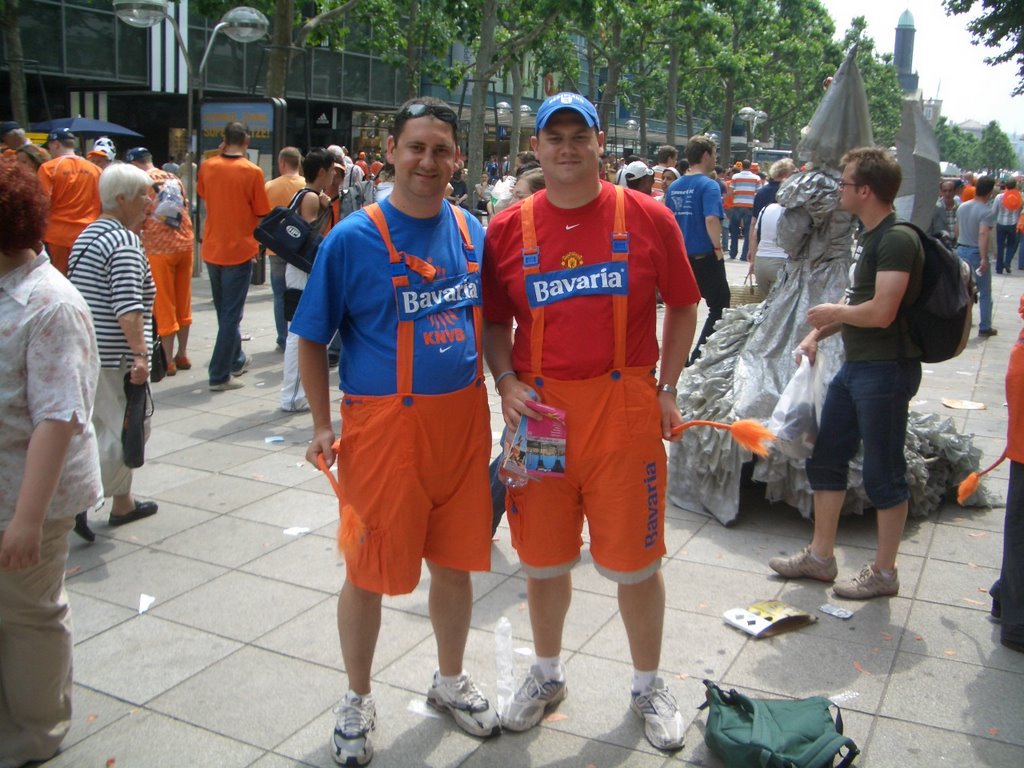
As much as anyone with no ties to Holland, I have always been a fan of Dutch soccer. I've watched highlights of Johan Cruyff's "Total Football" teams of the '70s, and enjoyed the stylish play of the '80s and '90s squads, first with Marco van Basten, Ruud Gullit and Frank Rijkaard, and then with Dennis Bergkamp and Patrick Kluivert. A throwback Ajax jersey I owned in college probably contributed to the lack of women I dated at the time, but it was the shirt of choice for my passport photo. In 2006 my brother and I partied with the Orange Army in Stuttgart. As a Liverpool fan, I of course love the hard working, playmaking abilities of Dirk Kuyt, and during this tournament I've been awed by the talents of Wesley Sniejder. So despite not a single Dutch ancestor that I'm aware of hanging off my family tree, I'm thrilled to see them in the Final. That's why I must add the following: Arjen Robben, you're killing this for me.
Soccer haters usually bring up one of two arguments. Not enough scoring or they can't stand the flopping and diving. I won't listen to the first point unless that person's favorite sport is bowling. As for the second, while no soccer fan enjoys the theatrics, I typically counter with a list of countries who don't engage in such tactics. And in the past, Holland has been on the list. Not anymore after Arjen Robben has emerged as the premier flop artist at the 2010 World Cup.

What's a shame is that Robben is a tremendously skilled player who doesn't need to turn to the dark side. His magnificent strike in this spring's Champions League against Manchester United helped propel Bayern Munich to the Final, and his opening goal against Slovakia showed his remarkable ability to cut to the inside and let fire from long range. But on the flip side, we have seen a player who is eager to take minimal contact and act like he's been cut down by a sniper. His hysterics against Brazil lead to the free kick that set up the first of Holland's two goals. Today he was rightfully criticized by the ESPN broadcast duo of Ian Darke and John Harkes for exaggerating an injury after a slight collision. His antics are an unfortunate exception on an otherwise exceptional Dutch team. Heading into today's game, his coach claimed he "doesn't do it on purpose," a statement that's tough to validate.
Robben's skills will be on display for a global audience in Sunday's showpiece final. (FYI, I love using the phrase "showpiece final.") I'll be breaking out my contraband Dutch overalls for the occasion. If I'm bringing my Dutch best, I hope Arjen Robben can do the same.
Soccer haters usually bring up one of two arguments. Not enough scoring or they can't stand the flopping and diving. I won't listen to the first point unless that person's favorite sport is bowling. As for the second, while no soccer fan enjoys the theatrics, I typically counter with a list of countries who don't engage in such tactics. And in the past, Holland has been on the list. Not anymore after Arjen Robben has emerged as the premier flop artist at the 2010 World Cup.

What's a shame is that Robben is a tremendously skilled player who doesn't need to turn to the dark side. His magnificent strike in this spring's Champions League against Manchester United helped propel Bayern Munich to the Final, and his opening goal against Slovakia showed his remarkable ability to cut to the inside and let fire from long range. But on the flip side, we have seen a player who is eager to take minimal contact and act like he's been cut down by a sniper. His hysterics against Brazil lead to the free kick that set up the first of Holland's two goals. Today he was rightfully criticized by the ESPN broadcast duo of Ian Darke and John Harkes for exaggerating an injury after a slight collision. His antics are an unfortunate exception on an otherwise exceptional Dutch team. Heading into today's game, his coach claimed he "doesn't do it on purpose," a statement that's tough to validate.
Robben's skills will be on display for a global audience in Sunday's showpiece final. (FYI, I love using the phrase "showpiece final.") I'll be breaking out my contraband Dutch overalls for the occasion. If I'm bringing my Dutch best, I hope Arjen Robben can do the same.
Monday, July 5, 2010
World Cup 2010: Holland-Uruguay Semifinal Preview
Holland meet Uruguay in Cape Town in the first World Cup semifinal. The match pits two unlikely participants; Holland were twice runners-up 1974 and 1978, and last appeared in the semifinals in 1998. Uruguay won two of the first four World Cups, but haven't reached the final four in 40 years.
 Wesley Sneijder elevated himself to Dutch legend status with his play against Brazil in the quarterfinals. His looping ball into the box became the own goal that got Holland level, and his header off a corner kick won the match. While Sneijder, Arjen Robben and Robin van Persie are the focal points of the Dutch attack, the contributions of Dirk Kuyt have been critical to Holland's success. His non-stop engine has set up several scoring opportunities, including the flick-on header that found Sneijder last Friday.
While Holland's near-perfect second half was the highlight in the win over Brazil, the play that saved the match was a stunning one-handed save by Maarten Stekelenburg to deny Kaka late in the first half. If Stekelenburg gets beat for a 2-0 Brazil lead, Holland are already home. Instead they stand 90 minutes away from their third crack at the World Cup crown.
 Overlooked in the post-game furor over Luis Suarez's intentional hand ball that saved the match against Ghana was the red card suspension that will cost Uruguay one of their top offensive threats. With Suarez gone, the pressure rest on Diego Forlan, whose majestic free kick leveled the quarterfinal match. With out his attack partner, may prove easier for the Dutch to contain.
A trip to the semifinals has given the Uruguay side a sense of proud accomplishment. The Dutch, meanwhile, feel that they're just getting started. Their march to an elusive title continues.
Prediction: Holland 1, Uruguay 0
 Wesley Sneijder elevated himself to Dutch legend status with his play against Brazil in the quarterfinals. His looping ball into the box became the own goal that got Holland level, and his header off a corner kick won the match. While Sneijder, Arjen Robben and Robin van Persie are the focal points of the Dutch attack, the contributions of Dirk Kuyt have been critical to Holland's success. His non-stop engine has set up several scoring opportunities, including the flick-on header that found Sneijder last Friday.
While Holland's near-perfect second half was the highlight in the win over Brazil, the play that saved the match was a stunning one-handed save by Maarten Stekelenburg to deny Kaka late in the first half. If Stekelenburg gets beat for a 2-0 Brazil lead, Holland are already home. Instead they stand 90 minutes away from their third crack at the World Cup crown.
 Overlooked in the post-game furor over Luis Suarez's intentional hand ball that saved the match against Ghana was the red card suspension that will cost Uruguay one of their top offensive threats. With Suarez gone, the pressure rest on Diego Forlan, whose majestic free kick leveled the quarterfinal match. With out his attack partner, may prove easier for the Dutch to contain.
A trip to the semifinals has given the Uruguay side a sense of proud accomplishment. The Dutch, meanwhile, feel that they're just getting started. Their march to an elusive title continues.
Prediction: Holland 1, Uruguay 0
Subscribe to:
Posts (Atom)